

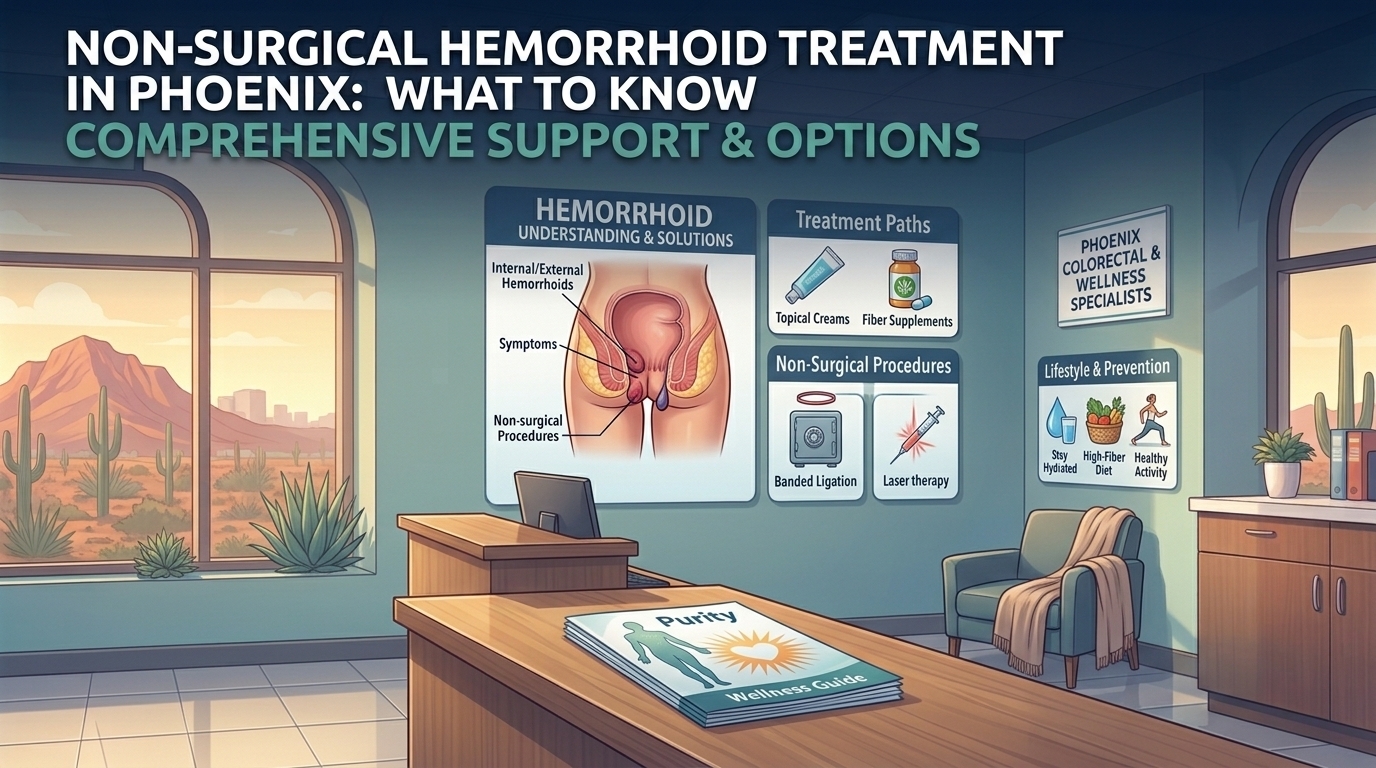
Understanding Non-Surgical Hemorrhoid Treatment in Phoenix
Hemorrhoids are a common medical concern that can cause discomfort, itching, swelling, irritation, and bleeding during bowel movements. The good news is that hemorrhoids can often be managed without traditional surgery, depending on their severity, location, and the symptoms they cause.
For individuals exploring non-surgical hemorrhoid treatment in Phoenix, understanding the available options is an important first step toward finding appropriate care. Treatments may include dietary changes, increased fiber intake, warm sitz baths, topical medications, and minimally invasive office-based procedures.
College Concierge Medical recognizes the importance of accessible health information that helps people make informed decisions about their care. Learning about hemorrhoid symptoms, potential treatment options, recovery expectations, and warning signs can help patients have more productive conversations with a qualified healthcare professional.
What Are Hemorrhoids and Why Do They Develop?
Hemorrhoids are swollen or enlarged vascular structures in the lower rectum and around the anus. These structures are part of normal anatomy, but they can become enlarged, irritated, or symptomatic when surrounding tissues and blood vessels experience increased pressure.
Hemorrhoids may develop gradually or become noticeable after constipation, straining during bowel movements, prolonged sitting on the toilet, or other factors that increase pressure in the rectal area. Pregnancy, aging, chronic diarrhea, and insufficient dietary fiber can also contribute to the development of symptoms.
Not every case requires a medical procedure. Some hemorrhoids improve with conservative measures, while others need evaluation and more targeted treatment.
Internal Hemorrhoids: Symptoms That May Be Easy to Overlook
Internal hemorrhoids develop inside the rectum, where there are fewer pain-sensitive nerves than in the skin surrounding the anus. As a result, they may not cause pain initially.
Common symptoms include:
- Bright red blood on toilet paper, in the toilet bowl, or on the surface of the stool.
- A feeling that a bowel movement is incomplete.
- Tissue protruding through the anus during bowel movements.
- Mucus discharge or irritation around the anal opening.
- Discomfort associated with prolapsing hemorrhoidal tissue.
Internal hemorrhoids are classified by their degree of prolapse, or how far the tissue extends outside the anus. Mild cases may respond to fiber supplementation and bowel habit changes, while more advanced cases may benefit from office-based procedures.
Important: Rectal bleeding should not automatically be attributed to hemorrhoids. Anal fissures, inflammatory conditions, polyps, and colorectal cancer can cause similar symptoms. A healthcare professional can determine whether further testing is necessary.
External Hemorrhoids: Swelling, Irritation, and Discomfort
External hemorrhoids develop beneath the skin around the anus. Because this area contains sensitive nerves, external hemorrhoids may cause itching, swelling, tenderness, or pain when sitting, walking, or passing stool.
A blood clot can occasionally form inside an external hemorrhoid, creating a condition known as a thrombosed external hemorrhoid. This may cause sudden, substantial pain and a firm, tender lump near the anus.
Some external hemorrhoids improve with conservative treatment, including warm baths, gentle hygiene, and measures to prevent constipation. However, severe or sudden pain warrants prompt medical evaluation because certain cases may benefit from time-sensitive treatment.
Understanding whether symptoms are caused by internal hemorrhoids, external hemorrhoids, or another condition helps guide the selection of appropriate care.
Why Consider Non-Surgical Hemorrhoid Treatment in Phoenix?
Many people prefer to explore conservative or minimally invasive treatments before considering surgery. Depending on the diagnosis, non-surgical hemorrhoid treatment may help reduce bleeding, relieve itching, improve bowel movements, and address prolapsing internal hemorrhoids without a traditional surgical operation.
For Phoenix-area residents, learning about these options can make it easier to discuss symptoms with a qualified healthcare professional and understand what treatment may involve.
Potential Benefits of Non-Surgical Hemorrhoid Care
Non-surgical treatment is not a single procedure. It includes a range of approaches, from home care to medical treatments performed in an office setting. Depending on the method and the condition being treated, potential benefits may include:
- Less invasive care: Many approaches do not require an operation under general anesthesia.
- Symptom management: Treatment can target common problems such as itching, irritation, mild pain, and bleeding.
- Convenient treatment options: Certain office-based procedures can be performed without a hospital admission.
- A more individualized approach: Healthcare professionals can consider symptom severity, medical history, and patient preferences when recommending treatment.
- Support for long-term prevention: Dietary and bowel habit changes can reduce straining and help prevent recurring symptoms.
However, non-surgical treatment does not guarantee permanent relief. Hemorrhoids can return, and some advanced cases require surgical evaluation. The appropriate treatment depends on an accurate diagnosis rather than a preference for a particular procedure alone.
Non-Surgical Hemorrhoid Treatment Options: From Home Care to Office Procedures
The best treatment for hemorrhoids depends on their location, severity, and response to previous care. Some patients improve with lifestyle changes, while others need a clinician to perform a minimally invasive procedure.
Understanding the differences between these options can help patients prepare for a medical consultation and set realistic expectations.
1. Increase Dietary Fiber to Support Easier Bowel Movements
Increasing dietary fiber is one of the most important first steps in managing hemorrhoids. Fiber helps regulate bowel movements and can make stool easier to pass, reducing the need to strain. Less straining can ease pressure on hemorrhoidal tissue and help improve symptoms such as bleeding and prolapse.
Fiber-rich foods include:
- Whole-grain bread, oatmeal, and brown rice.
- Fruits such as apples, pears, berries, and oranges.
- Vegetables such as broccoli, carrots, peas, and leafy greens.
- Beans, lentils, chickpeas, and other legumes.
- Nuts and seeds, when appropriate for your diet.
Many adults benefit from gradually increasing fiber intake toward approximately 20–35 grams daily, although individual needs vary. Adding too much fiber too quickly may cause gas, bloating, or abdominal discomfort, so gradual changes are generally easier to tolerate.
A fiber supplement, such as psyllium, may help when food alone does not provide enough fiber. Ask a healthcare professional or pharmacist which product is suitable for you, particularly if you have other medical conditions or take medications.
Fiber is not an instant solution, but consistent dietary changes can help address constipation and reduce the likelihood of recurring symptoms.
2. Stay Hydrated and Establish Healthy Bathroom Habits
Adequate fluid intake helps fiber work effectively and supports regular bowel movements. Your individual fluid needs depend on factors such as activity level, climate, medications, and existing health conditions. People who have been advised to restrict fluids should follow their clinician’s recommendations.
Bathroom habits are equally important. Repeated straining can increase pressure in the rectal area, aggravating existing hemorrhoids or contributing to new symptoms.
Consider these practical habits:
- Respond to the urge to have a bowel movement instead of repeatedly delaying it.
- Avoid pushing or holding your breath while passing stool.
- Limit unnecessary time spent sitting on the toilet.
- Avoid prolonged scrolling or reading while using the bathroom.
- Maintain a consistent routine without forcing a bowel movement.
These changes may seem simple, but they address common factors associated with hemorrhoid symptoms. They can also complement professional treatment when additional care is needed.
3. Use Warm Sitz Baths for Temporary Symptom Relief
A sitz bath involves sitting in a few inches of comfortably warm water to soothe the area around the anus. It may help temporarily relieve itching, irritation, and discomfort, particularly after bowel movements.
To use a sitz bath safely, choose clean, comfortably warm water rather than hot water. Soak for around 10–15 minutes if comfortable, then gently pat the area dry instead of rubbing it.
Avoid adding fragranced products, harsh cleansers, or unapproved substances that could irritate sensitive skin. Keep any bath equipment clean to reduce the risk of irritation or infection.
Sitz baths are a supportive measure, not a treatment that reliably eliminates hemorrhoids. Scientific evidence for their effectiveness is limited, so persistent symptoms should still be evaluated by a healthcare professional.
4. Consider Over-the-Counter Creams and Other Topical Treatments
Over-the-counter hemorrhoid creams, ointments, and suppositories may provide short-term relief from itching, mild pain, or irritation. Depending on the product, ingredients may include local anesthetics, protectants, or low-strength corticosteroids.
These products generally focus on symptom relief rather than correcting the underlying structural problem. They may not adequately address persistent bleeding, significant prolapse, or larger hemorrhoids.
Follow the product label and ask a healthcare professional or pharmacist about appropriate use, especially if you are pregnant, take other medications, have allergies, or experience unexplained rectal bleeding.
Products containing hydrocortisone should generally not be used longer than one week unless a healthcare professional advises otherwise, because prolonged use can irritate or thin the skin. Stop using a product if it causes a rash or worsening symptoms.
If symptoms persist after approximately one week of home treatment, seek medical advice instead of repeatedly switching products or extending their use without guidance.
5. Rubber Band Ligation for Certain Internal Hemorrhoids
Rubber band ligation is a commonly used office-based procedure for selected internal hemorrhoids, particularly those that bleed or protrude during bowel movements. It is often considered when conservative measures have not provided sufficient relief.
During the procedure, a trained healthcare professional places a small elastic band around the base of the internal hemorrhoid. The band restricts its blood supply, causing the treated tissue to shrink and eventually detach. Healing tissue forms in the area.
What patients should know:
- It is intended for internal hemorrhoids, not routine treatment of external hemorrhoids.
- It is generally performed in an office or outpatient setting.
- Some patients require more than one treatment session.
- Temporary pressure, discomfort, or a feeling of needing to pass stool may occur.
- Bleeding can occur, including delayed bleeding after the treated tissue separates.
Although rubber band ligation is effective for many suitable patients, it carries risks and is not appropriate for every hemorrhoid. Severe pain, heavy bleeding, fever, or difficulty urinating after a procedure requires prompt medical assessment.
The American Society of Colon and Rectal Surgeons identifies rubber band ligation as an effective office-based option for many patients with appropriate internal hemorrhoids.
- Sclerotherapy: An Injection-Based Treatment Option
Sclerotherapy is another office-based treatment used for selected internal hemorrhoids. It involves injecting a medical solution into the hemorrhoidal tissue to trigger a controlled response that helps shrink it.
The procedure may be considered for certain patients, including those for whom another treatment is less suitable. Its effectiveness depends on the type of hemorrhoid, the severity of symptoms, and the specific technique used.
Potential advantages include avoiding a conventional operation and receiving treatment in an outpatient setting. Nevertheless, sclerotherapy is not risk-free. Bleeding, discomfort, inflammation, and other complications are possible, and repeat treatment may be necessary.
Patients should discuss the expected benefits, risks, alternatives, and likelihood of needing additional treatment with the clinician performing the procedure.
7. Infrared Coagulation for Selected Internal Hemorrhoids
Infrared coagulation uses controlled infrared energy to create a small area of heat-treated tissue near the base of an internal hemorrhoid. The resulting healing response helps reduce the hemorrhoid’s blood supply and encourages the tissue to shrink.
This procedure may be appropriate for certain smaller internal hemorrhoids, particularly when bleeding is a prominent symptom.
Infrared coagulation is generally performed in an office setting and does not require traditional surgical removal. However, temporary discomfort or bleeding can occur, and more than one session may be necessary.
It is not suitable for every patient, and it does not address all types of external hemorrhoids. A medical examination helps determine whether this option is appropriate.
Rubber band ligation, sclerotherapy, and infrared coagulation are established office-based treatments for selected internal hemorrhoids. The best choice depends on clinical findings and the patient’s circumstances.
How to Know Which Hemorrhoid Treatment Is Right for You
Choosing a treatment involves more than identifying the most convenient option. A clinician needs to understand the nature of the symptoms, assess the affected tissue, and consider other possible causes.
For example, mild itching associated with constipation may improve with dietary changes and short-term symptom relief. Persistent bleeding from an internal hemorrhoid may require an office-based procedure. A painful external lump may need a different evaluation altogether.
Factors That Influence Your Treatment Plan
Several factors can influence the recommended approach:
Hemorrhoid type: Internal and external hemorrhoids have different characteristics, and office-based procedures such as banding are designed for internal hemorrhoids.
Severity and prolapse: Larger or more advanced hemorrhoids may respond differently from smaller hemorrhoids.
Duration of symptoms: New symptoms may require a different evaluation from recurring bleeding or discomfort that has continued for months.
Previous treatment: A clinician may consider whether dietary changes, medications, or earlier procedures provided relief.
Other health conditions: Pregnancy, bleeding disorders, medications that affect clotting, and digestive conditions may influence treatment decisions.
Patient preferences: Recovery expectations, convenience, discomfort, and willingness to undergo a procedure can be part of shared decision-making.
No single treatment works for everyone. An individualized assessment helps balance symptom relief, potential risks, and the likelihood of recurrence.
What Happens During a Hemorrhoid Evaluation in Phoenix?
If you are experiencing symptoms that may be related to hemorrhoids, a medical evaluation can help identify the cause and determine the next steps. Although hemorrhoids are common, similar symptoms can occur with other conditions, making an accurate diagnosis important.
For people seeking non-surgical hemorrhoid treatment in Phoenix, understanding the evaluation process may help reduce uncertainty and make an appointment feel more manageable.
Medical History and Symptom Assessment
A healthcare professional may ask when your symptoms began, how frequently they occur, and whether you have noticed bleeding, pain, itching, swelling, or tissue protruding from the anus.
You may also be asked about constipation, bowel habits, dietary patterns, medications, previous treatments, and relevant medical history. Be prepared to mention any changes in your bowel movements, abdominal discomfort, or family history of colorectal conditions.
These details help the clinician understand your symptoms and determine whether an examination or additional testing is appropriate.
Physical Examination and Diagnostic Testing
Depending on your symptoms, an evaluation may involve examining the skin around the anus and performing a digital rectal examination. An anoscopy, which uses a short instrument to view the anal canal, may also be recommended to assess internal hemorrhoids.
Additional testing, including colonoscopy, may be appropriate when bleeding has no clear source, symptoms persist, or other risk factors indicate the need for further investigation.
Not every patient requires extensive testing. The decision depends on age, medical history, examination findings, and individual risk factors.
How Long Does Non-Surgical Hemorrhoid Treatment Take to Work?
Recovery and symptom improvement vary depending on the treatment method, the severity of the hemorrhoids, and the patient’s overall health.
Home treatments may begin relieving mild irritation within several days, although consistent dietary and bowel habit changes are often needed to maintain improvement. More persistent symptoms may take longer to resolve or require professional intervention.
Office-based procedures have their own recovery timelines. Some patients resume ordinary activities relatively quickly, while others experience temporary discomfort or need additional treatment sessions.
It is important to distinguish between symptom relief and complete resolution. A reduction in itching or bleeding does not necessarily mean the underlying condition has been fully treated.
Follow your clinician’s aftercare instructions and seek follow-up care if symptoms persist, return, or worsen.
Can Hemorrhoids Return After Non-Surgical Treatment?
Yes. Hemorrhoids can recur even after successful treatment, especially when constipation, straining, or other contributing factors continue.
Maintaining a fiber-rich diet, drinking adequate fluids, avoiding prolonged toilet sitting, and responding promptly to bowel urges may help reduce recurrence.
Some patients may also need repeat office-based procedures. Others may eventually require surgical evaluation if symptoms are severe or do not respond to less invasive treatments.
The goal is not simply to relieve the current symptoms but also to identify contributing factors and develop a sustainable management plan.
When Should You Seek Medical Attention for Hemorrhoids?
Although many hemorrhoid symptoms are manageable, certain signs should never be ignored. Assuming that every instance of rectal bleeding is caused by hemorrhoids can delay the diagnosis of another condition.
Contact a healthcare professional if you experience:
- Rectal bleeding, even if you suspect hemorrhoids.
- Symptoms that persist after approximately one week of home treatment.
- Repeated episodes of bleeding or discomfort.
- A painful lump or swelling near the anus.
- Changes in bowel habits or stool appearance.
- Symptoms that return despite previous treatment.
Seek urgent medical attention for heavy or continuous rectal bleeding, severe anal pain, dizziness or fainting associated with bleeding, or bleeding accompanied by significant abdominal pain, fever, or diarrhea.
Prompt assessment helps determine whether you need routine treatment, urgent care, or additional diagnostic testing.
Choosing a Medical Provider for Hemorrhoid Treatment in Phoenix
Finding appropriate care begins with choosing a qualified healthcare professional who can evaluate your symptoms and explain the available treatment options.
When researching hemorrhoid treatment in Phoenix, consider the following factors.
Look for Appropriate Clinical Experience
Ask whether the provider regularly evaluates anorectal conditions and is qualified to perform the treatment being considered. Depending on your symptoms, this may involve a primary care clinician, gastroenterologist, or colorectal specialist.
A provider should be able to explain the diagnosis, discuss alternative treatments, and clarify when referral to another specialist is necessary.
Understand the Benefits, Risks, and Costs
Before proceeding with a procedure, ask what it is intended to achieve, what complications are possible, whether repeat sessions may be needed, and what recovery typically involves.
You can also ask about insurance coverage, out-of-pocket costs, follow-up appointments, and any restrictions after treatment.
A clear explanation of these details allows you to make an informed decision without relying on unrealistic promises.
Prioritize Clear Communication and Personalized Care
Hemorrhoids can be an uncomfortable subject to discuss, but a professional healthcare setting should allow you to ask questions without embarrassment.
Look for a provider who listens carefully, respects your concerns, and explains recommendations in language you understand. Treatment should reflect your symptoms and medical needs rather than follow a one-size-fits-all approach.
For College Concierge Medical: Patients exploring care options can use the information in this guide to prepare questions about symptoms, appropriate evaluation, and available treatment pathways. Confirm the organization’s current services, provider qualifications, and appointment availability before presenting any particular procedure as an offered service.
Frequently Asked Questions About Non-Surgical Hemorrhoid Treatment in Phoenix
Q. What is the best non-surgical hemorrhoid treatment in Phoenix?
A: The most appropriate treatment depends on the type and severity of the hemorrhoids. Mild cases may improve with increased fiber, adequate fluid intake, and healthier bowel habits. Persistent internal hemorrhoids may benefit from office-based procedures such as rubber band ligation, sclerotherapy, or infrared coagulation.
Q. Can hemorrhoids go away without surgery?
A: Yes. Many hemorrhoid symptoms improve with conservative treatment, particularly when constipation and straining are addressed. Some internal hemorrhoids, however, require an office-based procedure when symptoms continue despite lifestyle changes.
Q. Are non-surgical hemorrhoid treatments painful?
A: The level of discomfort depends on the treatment and the individual. Home care may provide relief, while office-based procedures can cause temporary pressure, discomfort, or bleeding.
Q. How long should I try home treatment before seeing a doctor?
A: If symptoms have not improved after approximately one week of home treatment, seek medical advice. Rectal bleeding should also be evaluated rather than automatically attributed to hemorrhoids. Severe pain or heavy bleeding warrants more urgent assessment.
Q. Can external hemorrhoids be treated without surgery?
A: Some external hemorrhoids improve with conservative measures, including fiber intake, avoiding straining, gentle hygiene, and short-term symptom relief. However, a thrombosed external hemorrhoid can cause significant pain and may require prompt medical evaluation.
Q. How can I help prevent hemorrhoids from returning?
A: To help reduce recurrence, eat fiber-rich foods, maintain adequate hydration, avoid straining, and limit the time spent sitting on the toilet. Addressing constipation and maintaining regular bowel habits are important parts of long-term management.
Q. When is surgery necessary for hemorrhoids?
A: Surgery may be considered for large external hemorrhoids, advanced prolapsing hemorrhoids, or symptoms that do not respond adequately to conservative and office-based treatments. The decision depends on the diagnosis, symptom severity, and expected benefits and risks.
Q. How do I find hemorrhoid treatment near me in Phoenix?
A: Start by looking for a qualified healthcare professional who evaluates hemorrhoids and related anorectal conditions. Ask about diagnostic services, available non-surgical treatments, provider qualifications, insurance coverage, and follow-up care.
Conclusion: Explore Your Options for Non-Surgical Hemorrhoid Treatment in Phoenix
Hemorrhoids can cause uncomfortable symptoms, but many people can manage them successfully without traditional surgery. Treatment options range from dietary changes and improved bowel habits to minimally invasive office-based procedures for selected internal hemorrhoids.
College Concierge Medical encourages informed healthcare decisions. If you are experiencing symptoms associated with hemorrhoids, contact a qualified healthcare professional to discuss your concerns, determine whether an examination is needed, and explore the treatment options appropriate for your condition.