

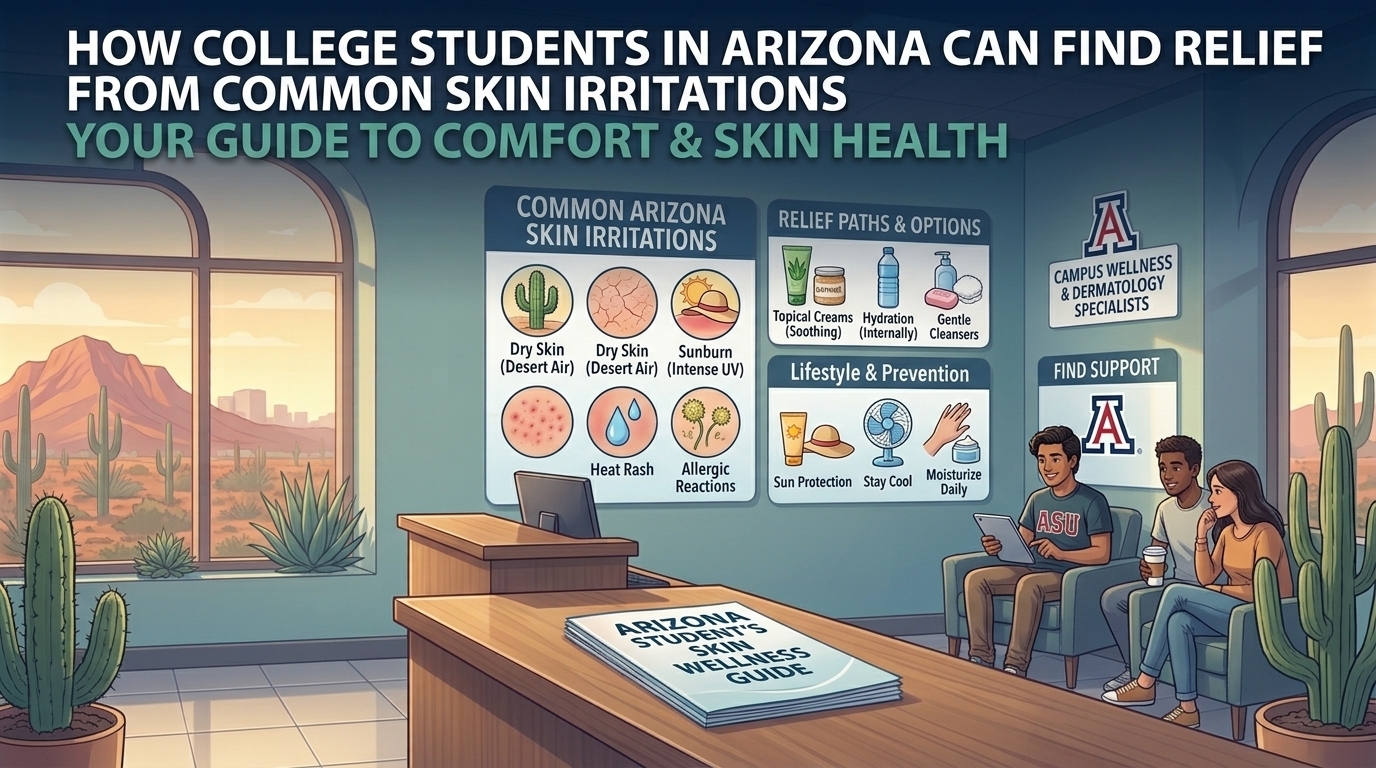
The Arizona College Student’s Guide to Soothing Eczema, Acne, Rashes and Sunburn
Between early-morning classes, late-night study sessions, campus workouts and long walks under the desert sun, life as a college student in Arizona is demanding. Your skin is often the first part of your body to show it. Maybe your hands crack and itch every winter, your face breaks out before every exam, or your arms are red and bumpy after a weekend hike. These are some of the most common concerns students bring to us, and they are rarely just cosmetic. Itching, burning and pain can disrupt your sleep, your focus and your confidence.
The good news is that most everyday skin irritations respond well to a thoughtful, consistent approach. This guide explains why Arizona’s climate and student lifestyle make skin problems so frequent. It also covers how to recognize the most common conditions and which gentle, evidence-informed steps can bring relief. Just as important, it tells you when it is time to stop self-treating and see a qualified healthcare professional.
Why Arizona’s Desert Climate and Campus Lifestyle Make Skin Irritation So Common Among College Students
Arizona is beautiful, but it is a demanding environment for skin. Humidity in much of the state is very low, and dry air pulls moisture from the outer layer of your skin faster than it can be replaced. When that protective barrier weakens, skin becomes tight, flaky and itchy, and it reacts more easily to soaps, fragrances, sweat and friction. Add intense UV exposure at our elevation and latitude, and you have a recipe for sunburn, pigmentation changes and long-term damage.
Hard water is another factor many newcomers overlook. Much of Arizona has mineral-rich water, which can leave a residue on the skin after showering and make cleansers harder to rinse away. For people with sensitive skin or a tendency toward eczema, that residue can be enough to trigger a flare.
Student life adds its own pressures:
- Dorm and apartment living: Shared bathrooms, shared laundry and unfamiliar detergents expose you to new irritants and microbes.
- Air conditioning: Cooling systems run nearly year-round here and dry indoor air further, even when it feels comfortable.
- Irregular sleep: Skin repairs itself overnight, so late nights slow the process.
- Stress: Exams, finances and deadlines raise stress hormones that can inflame the skin and aggravate acne, eczema and psoriasis.
- Diet on a budget: Quick, processed meals are convenient, but they often lack the nutrients skin relies on.
- Outdoor activity: Hiking, intramural sports and pool days increase sun, sweat and chlorine exposure.
Understanding these patterns matters because it shifts the focus from “what cream should I buy?” to “what is actually driving my skin symptoms?” Lasting relief usually comes from addressing both the surface and the underlying triggers.
Dry Skin and Eczema: How to Calm Itchy, Cracked, Inflamed Skin in Arizona’s Low-Humidity Environment
Dry skin is the most common complaint among students who move to Arizona from more humid places. It shows up as tightness after showering, rough patches on the shins and forearms, flaking around the nose and eyebrows, and cracked knuckles. When dryness becomes persistent, red, intensely itchy and scaly, it may be atopic dermatitis, commonly called eczema.
Eczema is a chronic inflammatory condition tied to a compromised skin barrier and an overactive immune response. Common triggers include dry air, fragrance, wool or rough fabrics, harsh soaps, sweat, stress and certain foods or environmental allergens in sensitive individuals. In Arizona, seasonal pollen and dust can add to the load.
Practical steps that help many students:
- Shorten and cool your showers. Hot water strips natural oils. Aim for lukewarm water and about five to ten minutes.
- Moisturize within three minutes of bathing. Apply a thick, fragrance-free cream or ointment while skin is still slightly damp to lock in water. Creams containing ceramides, glycerin or petrolatum are well studied for barrier support.
- Choose gentle cleansers. Look for soap-free, fragrance-free formulas, and avoid scrubs on irritated areas.
- Use a humidifier. A small bedroom humidifier can make a noticeable difference in dry apartments and dorm rooms. Clean it regularly to prevent mold.
- Wash new clothes and bedding first, and use a fragrance-free, dye-free detergent.
- Try colloidal oatmeal. Oatmeal-based lotions and baths are widely used to soothe itching and have supporting research for mild irritation.
Scratching is the biggest enemy of recovery. It damages the barrier further and feeds the itch-scratch cycle. Keep nails short, and try a cool compress or an extra layer of moisturizer when the urge hits. If your eczema is widespread, weeping, sleep-disrupting or not improving after a couple of weeks of consistent care, it deserves professional attention. A naturopathic physician can look at the bigger picture, including food sensitivities, gut health, stress and nutrient status, alongside appropriate topical care.
College Acne and Stress Breakouts: Natural, Gentle Ways to Clear Skin Without Over-Drying It
Acne is not limited to the teenage years. Many students experience new or worsening breakouts at 18 to 25, driven by hormonal shifts, stress, sleep loss, dietary changes and new products or habits. In Arizona, an extra complication is that many people over-treat. They scrub, use harsh drying products and skip moisturizer, and in dry air this damages the skin barrier. The skin then becomes irritated, red and peeling while the acne persists.
Acne develops when excess oil, dead skin cells and bacteria clog pores and trigger inflammation. Contributing factors often include:
- Stress and cortisol: Exam periods frequently line up with flare-ups.
- High-glycemic foods and some dairy: Research suggests a link between these and acne in some individuals, though responses vary.
- Occlusive products: Heavy sunscreens, makeup or hair products can clog pores.
- Friction and sweat: Helmets, masks, gym equipment, phone screens and sweaty headbands can aggravate breakouts.
- Hormonal fluctuations: These are especially common in cycles that are irregular or stressed.
A gentler approach to acne care:
- Wash your face twice daily and after heavy sweating with a mild cleanser.
- Use a lightweight, non-comedogenic (non-pore-clogging) moisturizer, even if your skin is oily. Hydrated skin heals better.
- Choose an oil-free, non-comedogenic sunscreen. Skipping sun protection can worsen dark marks left after breakouts.
- Avoid picking or squeezing, which increases inflammation and scarring risk.
- Change pillowcases weekly and clean your phone regularly.
- Prioritize sleep, as consistent rest supports hormone balance and skin repair.
Over-the-counter ingredients such as benzoyl peroxide, salicylic acid and adapalene are commonly used, but introduce them slowly, one at a time, and use less than you think you need, especially in our dry climate. Some people explore options like zinc, omega-3 fatty acids or tea tree oil, but “natural” does not automatically mean “safe.” Tea tree oil, for example, can cause contact dermatitis in some people. If your acne is painful, cystic, scarring or affecting your mood, seek professional care rather than cycling through products. Hormonal and nutritional factors can be assessed, and a tailored plan is usually far more effective than guesswork.
Sunburn and Sun Sensitivity: Protecting and Soothing Your Skin Under the Intense Arizona Sun
Arizona has abundant sunshine, and many students spend hours outdoors without realizing how quickly UV damage accumulates. Even on cloudy or cooler days, UV rays penetrate. A sunburn is a form of skin injury, and repeated burns over the years raise the risk of premature aging and skin cancer. Some students also develop sun sensitivity, with itchy red bumps, hives or rashes after exposure, which may be heightened by certain medications, including some acne treatments and antibiotics. Check with a pharmacist or physician about any medication that increases photosensitivity.
Prevention comes first:
- Use a broad-spectrum sunscreen with SPF 30 or higher every day, including on walks to class. Reapply about every two hours when outdoors, and after swimming or heavy sweating.
- Mineral sunscreens containing zinc oxide or titanium dioxide are often better tolerated by sensitive or acne-prone skin.
- Wear a wide-brimmed hat, UV-protective sunglasses and lightweight long sleeves when possible.
- Seek shade during peak sun hours, roughly 10 a.m. to 4 p.m.
- Avoid tanning beds entirely.
If you do get burned:
- Cool the skin with lukewarm showers or cool compresses.
- Apply a gentle, fragrance-free moisturizer or aloe vera gel, avoiding products containing alcohol or numbing agents that may irritate.
- Drink extra water, since sunburn draws fluid toward the skin surface.
- Do not peel or pop blisters. Let skin shed naturally.
- Over-the-counter anti-inflammatory pain relievers may help some people, but follow the label and your healthcare provider’s guidance.
Seek medical care promptly if a sunburn involves widespread blistering, fever, chills, confusion, severe pain or signs of dehydration or heat illness. Also have any new, changing, bleeding or unusual mole examined by a professional. Early detection matters.
Heat Rash, Contact Dermatitis, Razor Bumps and Fungal Infections: Everyday Irritations Common in Dorms, Gyms and Desert Heat
Beyond dryness, acne and sunburn, several other skin issues crop up regularly among Arizona students.
Heat rash (miliaria). When sweat ducts become blocked, small red bumps or tiny clear blisters appear, often in skin folds, the chest, back or areas covered by tight clothing. Arizona’s extreme summer heat, combined with workouts or non-breathable fabrics, makes this common. Cooling down, wearing loose moisture-wicking clothing and avoiding heavy creams on affected areas usually helps it clear.
Contact dermatitis. This is a reaction to something your skin touched. Irritant contact dermatitis comes from substances like harsh soaps, sanitizers, cleaning products or detergents. Allergic contact dermatitis is an immune response to allergens such as fragrances, nickel in jewelry, certain preservatives or plants. Clues include a rash that appears where the offending item touched, along with redness, itching, burning or blisters. Identifying and avoiding the trigger is the key. Frequent hand sanitizer use and handwashing in dry air can also cause cracked, irritated hands.
Razor bumps and shaving irritation. Shaving dry skin or using dull blades can cause redness and ingrown hairs. Soften the skin with warm water first, use a fragrance-free shaving gel, shave in the direction of hair growth, replace blades often and moisturize afterward.
Fungal infections. Shared showers, locker rooms and pool decks are common places to pick up athlete’s foot or ringworm. Symptoms include itchy, scaly or ring-shaped patches. Wear shower sandals in communal facilities, dry thoroughly between toes, change out of sweaty clothing promptly and avoid sharing towels. Over-the-counter antifungals help many mild cases, but persistent or spreading rashes should be evaluated, since several conditions can look similar.
Bug bites and plant reactions. Desert hikes can bring insect bites, thorns and irritating plants. Wash the area with mild soap and cool water, and avoid scratching. Watch for increasing redness, warmth, swelling, pus or fever, which can signal infection.
A Simple, Budget-Friendly Daily Skin Care Routine for Busy Arizona College Students
You do not need a ten-step routine or expensive products. For most students, consistency matters more than complexity. Here is a straightforward approach built for desert living and a student schedule.
Morning:
- Rinse with lukewarm water or use a gentle cleanser if your skin is oily.
- Apply a lightweight moisturizer suitable for your skin type.
- Finish with a broad-spectrum SPF 30+ sunscreen, even on cloudy days.
Evening:
- Cleanse to remove sunscreen, sweat and dirt.
- Apply any targeted treatment (such as an acne product) as directed, starting slowly.
- Moisturize with a barrier-supporting cream or ointment.
Weekly habits:
- Change pillowcases and towels frequently.
- Launder workout clothes after each use.
- Wipe down your phone and gym equipment.
- Patch-test any new product on a small area of skin for a few days before using it widely.
Helpful ingredients to look for: ceramides, glycerin, hyaluronic acid, colloidal oatmeal, niacinamide, zinc oxide (for sun protection) and petrolatum-based ointments for very dry areas.
Ingredients to be cautious with: added fragrance, essential oils on broken skin, alcohol-heavy toners, harsh scrubs and aggressive exfoliating acids used too often.
Remember that more products increase the chance of irritation. If your skin is reacting, simplify rather than add. A short routine of cleanser, moisturizer and sunscreen is often the most effective reset.
The Root-Cause Connection: How Nutrition, Hydration, Sleep, Gut Health and Stress Influence Your Skin
Skin is not separate from the rest of your body. It reflects what is happening internally, which is why a naturopathic approach looks beyond the rash itself. While creams and cleansers manage the surface, daily habits shape how well your skin can heal.
Nutrition. Skin needs protein, healthy fats, vitamins and minerals to rebuild. Foods rich in omega-3 fatty acids (such as salmon, walnuts and flaxseed), colorful fruits and vegetables, and whole grains support a healthy inflammatory response. If you suspect certain foods trigger your symptoms, keep a simple food and symptom diary for a few weeks rather than cutting out entire food groups on your own. Overly restrictive diets can create new problems, particularly for students on a tight budget.
Hydration. Drinking enough water supports overall health, and in Arizona’s heat it also helps prevent dehydration. Water alone will not cure dry skin, because external moisturizing is still essential, but staying hydrated supports your body’s general function.
Sleep. Aim for seven to nine hours when possible. Poor sleep is linked with higher inflammation and stress hormones, which can worsen eczema, acne and itching.
Gut and immune health. Research into the gut-skin connection is ongoing, and some studies suggest links between digestive health and conditions like acne and eczema. A balanced, fiber-rich diet is a reasonable foundation, though individual needs differ.
Stress management. Chronic stress can trigger or worsen many skin conditions. Short, realistic practices such as walking between classes, breathing exercises, stretching, time outdoors in the cooler hours and protecting a little downtime can help. If stress, anxiety or low mood feels overwhelming, reach out to campus counseling services or a healthcare provider.
Supplements. Vitamin D, zinc, omega-3s, probiotics and others are often discussed for skin health, but supplements are not right for everyone. They can interact with medications or be unnecessary, and quality varies widely. Discuss them with a qualified practitioner before starting, ideally based on your individual needs and lab work when appropriate.
When Skin Irritation Is a Red Flag: Signs You Should Stop Self-Treating and See a Healthcare Professional
Home care works well for mild, short-lived problems, but some symptoms need prompt evaluation. Please seek care if you notice any of the following:
- A rash that is rapidly spreading, painful or accompanied by fever
- Signs of infection: warmth, swelling, pus, red streaking or increasing pain
- Blisters in or around the eyes, mouth or genitals
- A rash that appears after starting a new medication
- Severe itching that disrupts sleep for more than a few days
- Persistent or worsening symptoms despite two to four weeks of consistent care
- Scarring acne or painful cystic lesions
- Any new, changing, asymmetrical or bleeding mole or skin lesion
- Difficulty breathing, facial swelling or hives with dizziness, which require emergency care immediately
Skin conditions such as psoriasis, rosacea, fungal infections, scabies and certain autoimmune or allergic conditions can mimic simple irritation. A professional evaluation prevents delays, avoids treatments that may worsen the problem and gives you clarity. If you are unsure, it is always reasonable to ask.
How Arizona Naturopathic Medicine Supports Students With a Personalized, Whole-Person Approach to Skin Health
At Arizona Naturopathic Medicine, we believe lasting skin relief comes from understanding you as an individual, not just treating a rash. We know students juggle limited time, tight budgets and unpredictable schedules, so we focus on practical, realistic plans that fit your life.
A visit with our team may include:
- A thorough history: We look at your symptoms, skin care products, diet, sleep, stress, medications, family history and environment, including your living situation and climate exposure.
- Identifying likely triggers: We help you spot patterns related to food, products, habits or seasonal factors.
- Personalized care plans: These may combine gentle topical strategies, nutrition guidance, lifestyle adjustments and, where appropriate, targeted supplements, always considering safety and any medications you take.
- Collaboration and referrals: When your condition calls for dermatology, urgent care or other specialists, we will tell you and coordinate care when appropriate. Your wellbeing comes first.
- Education: We want you to understand why your skin is reacting so you can make confident choices long after your appointment.
If you are a student in Arizona dealing with itching, redness, breakouts or sun damage that will not go away, we invite you to schedule a consultation with Arizona Naturopathic Medicine. You do not have to simply live with uncomfortable skin.
Frequently Asked Questions About Skin Irritation Relief for Arizona College Students
Why does my skin feel so dry since moving to Arizona?
Low humidity, strong sun, hard water and constant air conditioning all draw moisture from your skin. Shorter lukewarm showers, a thick fragrance-free moisturizer applied right after bathing and a bedroom humidifier usually help noticeably.
Can stress really cause skin breakouts and rashes?
Yes. Stress hormones can increase inflammation and oil production and are known to aggravate acne, eczema and psoriasis. Managing stress and protecting sleep supports skin health.
Is aloe vera enough to treat a sunburn?
Aloe vera gel can feel soothing on mild sunburn, but it does not repair the damage. Keep the skin cool and moisturized, stay hydrated, and see a healthcare professional for severe burns, blistering or fever.
Are natural remedies always safe for the skin?
No. Essential oils, plant extracts and homemade mixtures can cause allergic reactions or burns in some people. Patch-test first, and ask a qualified professional before using anything on broken or inflamed skin.
How long should I wait before seeing a professional for a rash?
If a rash is severe, painful, spreading or accompanied by fever, seek care right away. For milder rashes, if there is no improvement after two to four weeks of consistent gentle care, schedule an evaluation.
Can diet changes help with eczema or acne?
For some people, yes. Triggers and responses vary widely, so work with a qualified practitioner rather than eliminating many foods on your own.
Final Thoughts: Healthy, Comfortable Skin Is Possible Throughout Your Years at College in Arizona
Skin irritation can feel like one more thing on an already full plate, but it does not have to be. Understanding how Arizona’s dry, sunny climate and the realities of student life affect your skin lets you respond with simple, consistent habits. Moisturize well, protect yourself from the sun, choose gentle products, support your body with sleep, nutrition and stress management, and do not hesitate to ask for professional help when something does not feel right.
Your skin is resilient and, with the right support, it can recover. If you would like personalized guidance, the team at Arizona Naturopathic Medicine is here to help you feel comfortable in your skin again.
Ready to find real relief? Contact Arizona Naturopathic Medicine today to schedule your consultation.